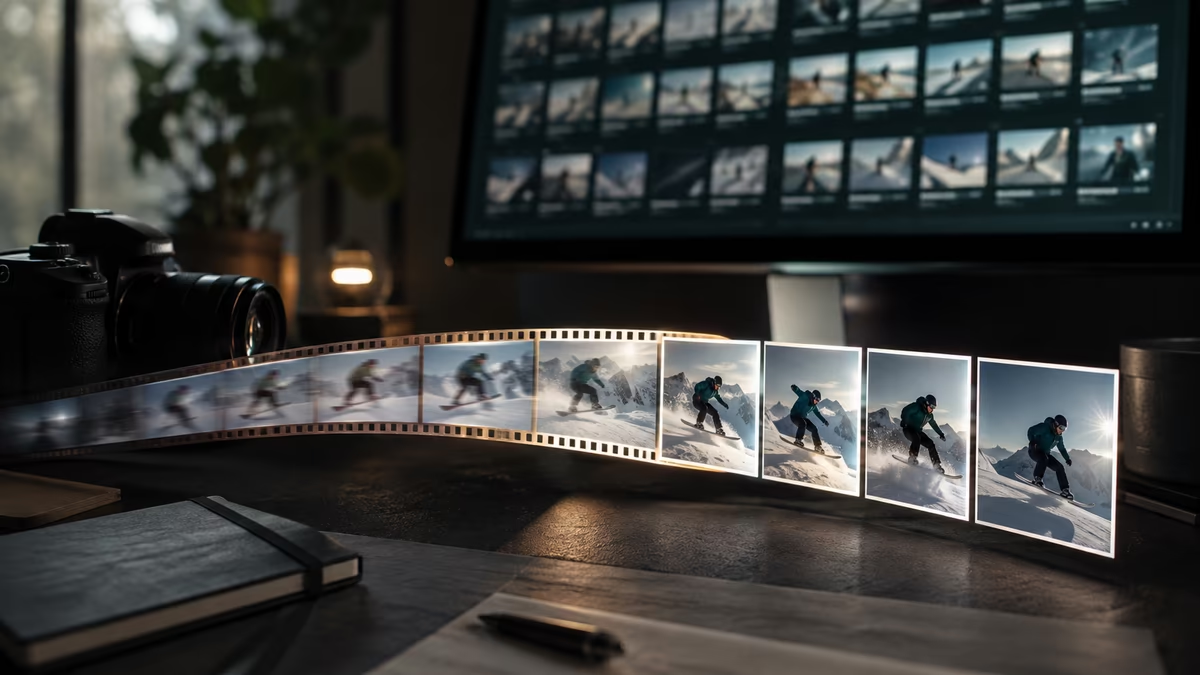
Video to Image for E-commerce: Better Product Images, Fast
Learn how to use video to image for ecommerce workflows — turn product spin clips into crisp gallery photos, thumbnails, and detail shots. Free, private, in-browser, no watermark.
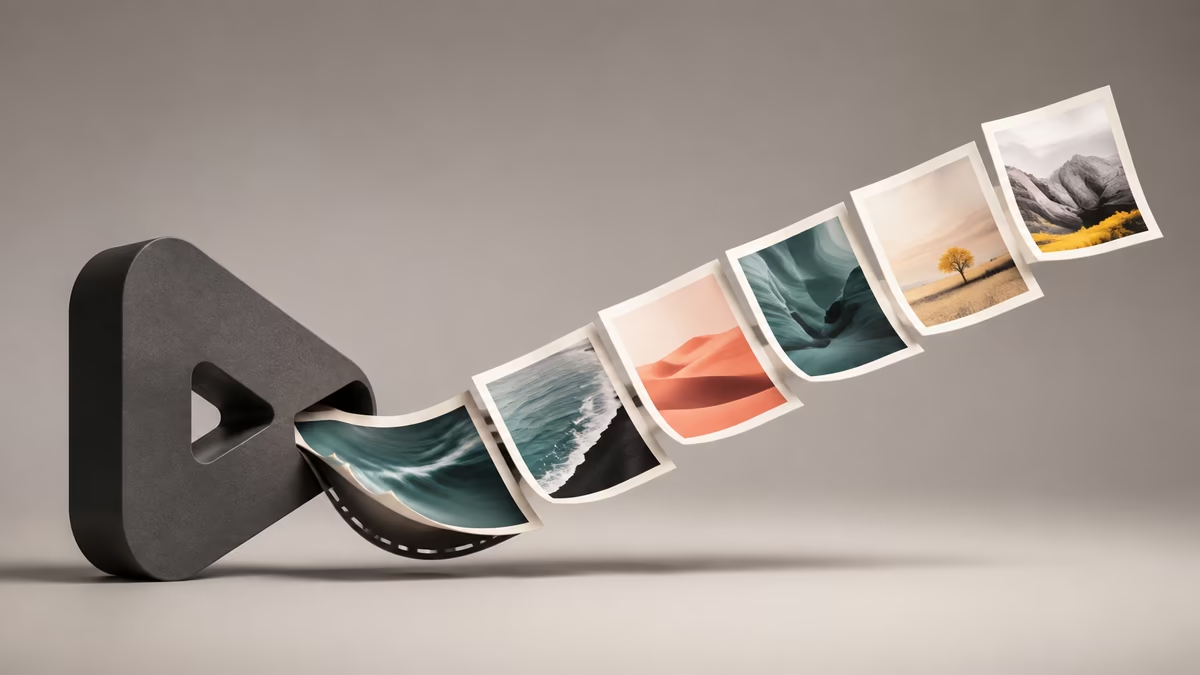
If you sell online, you already know that product images do the heavy lifting. Listings with rich, clear imagery convert better, get shared more often, and earn trust faster than text alone. But shooting a dedicated photo session for every SKU is expensive and slow. That's where video to image for ecommerce comes in: record one short product clip, then pull a whole set of polished stills from it. This guide shows you how to build a repeatable workflow that turns footage into gallery-ready images — using a free, in-browser tool that keeps your footage private and never adds a watermark.
Why turn product video into images?
Video is fantastic for storytelling, but most marketplaces and storefronts still lead with static images. Amazon, Shopify, Etsy, eBay, and Google Shopping all prioritize a primary still image, followed by a gallery of supporting angles. Extracting frames from a product clip lets you serve both masters from a single shoot.
Here's what you gain:
- More angles from one shoot. A slow 360° spin yields a dozen distinct views without restaging lights or camera.
- Faster turnaround. Film once, extract many. No rebooking a studio because the front shot was slightly out of focus.
- Consistent lighting. Every frame shares the same setup, so your gallery looks cohesive instead of stitched together from different sessions.
- Lower cost.
Hire a photographer for every product— you can produce the bulk of a gallery yourself and reserve a pro for hero shots only.
Pro tip: shoot your spin clip against a seamless white or light-gray sweep. Marketplaces like Amazon require a pure white background on the primary image, and clean footage is far easier to extract clean frames from.
Where extracted frames outperform traditional photos
Not every image needs to come from a stills camera. Extracted frames shine in specific spots:
| Use case | Why a frame beats a photo |
|---|---|
| Action / lifestyle shots | Capturing motion mid-stride is trivial when the camera is already rolling. |
| Detail close-ups | Zoom during the clip, then pick the sharpest frame. |
| Color variants | Spin the product under each light temp and harvest the best frame of each. |
| Thumbnail and social | Grab the single most expressive frame for ads and shares. |
| Size and scale context | Pause with a hand or prop in frame for instant scale reference. |
The key is intentionality: film with extraction in mind, and you'll never be short of usable stills.
A repeatable shoot-to-gallery workflow
Treat your clip as a photo session in motion. Here's a checklist you can run on every product:
- Clean the product and backdrop — dust and fingerprints show up sharply in stills.
- Lock exposure and white balance manually so frames don't shift mid-clip.
- Record a slow, steady 15–20 second spin or walkthrough.
- Pause on each hero angle for 2–3 seconds so you get a stable frame.
- Capture an extreme close-up pass for detail shots.
- Export JPG for photos and PNG where you need transparency or sharp text.
Doing this consistently means your next product takes half the time, because the setup becomes muscle memory.
Picking your hero frame
Your primary image is the one shoppers see first in search results, so it carries the most weight. Favor frames that are:
- Sharp and well-lit — reject anything with motion blur on the product itself.
- Centered with breathing room — leave margin so cropping to square or 4:5 doesn't clip the product.
- Color-accurate — confirm the frame matches the real product under daylight.
JPG or PNG for your product gallery?
Most marketplaces accept JPG, PNG, and sometimes WebP, but each has trade-offs for ecommerce:
| Format | Best ecommerce use | Notes |
|---|---|---|
| JPG | Primary photos, lifestyle shots | Smallest files, universal support, no transparency. |
| PNG | Logos, badges, cut-out products with transparent background | Larger files, supports alpha channel. |
| WebP | Modern storefronts that support it | Smallest size, but verify platform support. |
A practical rule: use JPG at ~90% quality for natural product photography (it's visually identical to PNG at a fraction of the size), and reserve PNG for graphics, logos, or any image that needs a transparent edge.
Extracting frames with the in-browser tool
The converter on this site runs entirely in your browser, so your product footage stays on your machine — important when you're working with unreleased inventory. Here's the loop:
1. Drop your product clip into the converter (MP4, MOV, WebM, and more).
2. Scrub the timeline to each hero angle.
3. Choose JPG for photos or PNG for cut-outs.
4. Click "Capture frame" and download.
5. Switch to interval mode to auto-grab a frame every 0.5s for a full contact sheet.
Because decoding happens locally, even a 4K clip processes as fast as your computer allows — no waiting on a remote queue, and no upload meter counting against a data cap. For a 20-second spin you can realistically walk away with 10–15 usable stills in a couple of minutes.
Optimizing extracted images for marketplaces
A great frame is only the start. Before you upload, prepare each image for the platform it's heading to:
- Background. If the primary image needs pure white, mask the product onto a white canvas. PNG cut-outs make this easier.
- Cropping. Match the platform's aspect ratio — Amazon likes square (1:1), Instagram shopping favors 4:5, Pinterest prefers 2:3.
- Compression. Aim for under 1 MB per image where possible. Most marketplaces penalize oversized files with slower load times.
- Alt text and filenames. Rename the file to something descriptive like
red-leather-wallet-front.jpgbefore uploading — it helps with image search.
# Batch resize a folder of extracted frames to 2000px on the long edge
# using a tool like ImageMagick (optional, run locally)
mogrify -resize 2000x2000> -quality 90 *.jpg
That snippet is optional — the converter hands you full-resolution originals, so resize copies only when a specific platform demands it.
Common ecommerce extraction mistakes
- Capturing during a fast pan. Motion blur ruins product detail. Slow your movements and pause on each angle.
- Ignoring color temperature shifts. If your clip spans daylight and warm indoor light, frames won't match. Lock white balance.
- Over-compressing JPGs. Below ~75% quality, banding appears in smooth product surfaces. Stay around 90%.
- Forgetting the bottom-of-gallery shots. Shoppers scroll to the end — include packaging, scale, and texture frames there.
Frequently asked questions
Is the tool really free for commercial product images? Yes. There's no charge and no watermark, and because processing is local, there's no usage meter. Use the output in your store, ads, or marketplace listings freely.
Will my unreleased product footage be uploaded? No. Frames are decoded on your device, so confidential inventory never touches a server. This matters when you're shooting ahead of a launch.
Can I batch extract from several product clips? Yes. Drop in multiple clips and pull frames from each without reconfiguring — handy when you're processing a whole catalog.
What resolution will my frames be? They match the source video. A 4K clip yields 4K stills, which is more than enough for any marketplace or storefront.
Wrapping up
Video to image for ecommerce turns a single product clip into a whole gallery of usable stills — primary photos, detail close-ups, lifestyle moments, and social thumbnails, all from one shoot. Shoot deliberately, extract with the free in-browser converter, and finish each frame with the right format, crop, and compression for its destination. You'll cut your photography spend, speed up your catalog pipeline, and keep every byte of footage private on your own machine. Drop in a clip today and pull your first set of product images in minutes.
by Video to Image